Key Considerations When Choosing Industrial PT Products
Power Transmission by Category

Brake Clutches
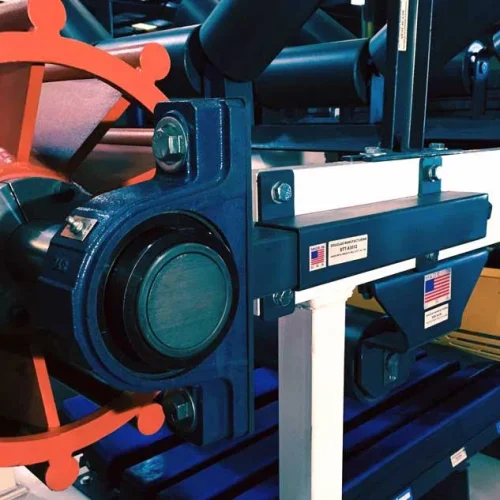
Mounted bearings units are encased in a housing that can be bolted onto a machine. They support spinning shafts and handle radial and axial loads, simplifying installation and enhancing performance.
Bushings
A cam follower is a special roller or needle bearing that tracks cam lobe profiles. It is mounted using either a stud or a yoke-style hole, enabling it to accommodate the cam’s back-and-forth or swinging motion.
Couplings
A ball bearing, also known as a rolling-element bearing, utilizes balls to keep the bearing races separated. A cage in these bearings ensures uniform load distribution and minimizes rotational friction.
Power Twist
Linear bearings are specialized mechanical components that facilitate unidirectional motion along a straight path, reducing friction in motion systems where the movement occurs linearly. They differ from radial bearings.
Sprockets

Sheaves
Deep Groove ball bearings are known for their seal, shield, and snap-ring configurations and can withstand radial, axial, or composite loads while allowing for high-running precision.
Timing Belts
These bearings are ball screw support bearings with high axial rigidity and sealed design. They do not require maintenance and come pre-equipped with high-performance lubrication grease.
Take up Units
Single-Row Angular Contact Ball bearings are typically used in combinations of two or more bearings. These combinations can be in a DB (back-to-back), DF (face-to- face), or DT (tandem).

Timing Belt Pulleys
Single-Row Angular Contact Ball bearings are typically used in combinations of two or more bearings. These combinations can be in a DB (back-to-back), DF (face-to- face), or DT (tandem).

Urethane
Urethane conveyor belts, also called polyurethane conveyor belts, are formed of polyurethane, a synthetic polymer that is highly resistant to abrasion, chemicals, and oils.
Bearings By Brand
Key Methods of Mechanical Power Transmission Systems

The major categories of mechanical power transmission systems include gear drives, chain drives, belt drives, and friction wheel drives.

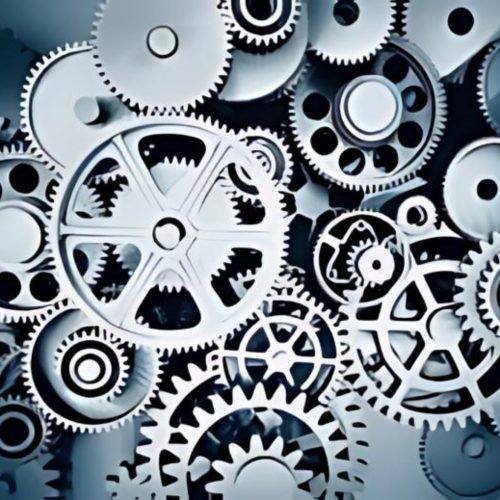
Gear drives use rotating wheel gears with teeth to transmit power between two shafts. Power transmission from the source of power to the load happens when the gear teeth mesh together.

Chain drives transmit power over long distances via roller chain links that are interlinked with sprocket teeth. The chain functions as an intermediary element between the two sprockets.

Belt drive systems have two pulleys and a belt. The belt grips the pulley’s power from the driving shaft (input) to the driven shaft (output) through friction. Pumps, compressors, and drives across industries use this PT method.

Friction wheel systems are made up of multiple wheels that drive a rotating motion when they contact one another. They depend on friction when the wheel’s contact to transfer power
Industrial Applications of Power Transmission Components
Power transmission components are used in various industries, each with its capabilities and features to satisfy the needs of its operations. Here are some significant sectors and how they use these components.
Cement and Aggregate
The cement and aggregate industries demand power transmission components that enable applications to run continuously and survive harsh conditions and enormous loads. Gears, gear drives, mixers, grinding equipment, bearings, and couplings are crucial components in crushers, mills, conveyors, and kilns and make them reliable.
Food & Beverage
Hygiene, precision, and efficient product handling are essential in food processing. Conveyors and packaging equipment use power transmission components such as stainless steel chains, food-grade belts, and bearings to maintain hygiene. Couplings, motors, o-rings, pumps, and seals are used in different stages of the food and beverage-making process.
Mining and Construction Industry
Metallic and non-metallic mineral production through surface or underground mining techniques needs various power transmission tools. Seals, motors, conveyor components, valves, motor controls, couplings, and more are extensively employed in drilling, loading, blasting, crushing, concentrating, and other crucial processes.
Wastewater Treatment
Wastewater treatment applications are diverse as there are several processes for treating wastewater. Power transmission supplies are used in various stages to purify water. They are a part of machines like Archimedes pumps, sediment tanks, aeration basins, rotating biological contractors, and disinfection channels.
Meat Processing
Power transmission products are a part of the entire slaughter process. Heavy-duty belting, conveyor components, screw conveyors, chains, pumps, motors, and drives are part of the applications involved in the several stages of the slaughter process. These include stables, cooling, deboning, processing, packing, and expedition.
Material Handling
Manufactured products demand shipping, carrying, and handling by producers, wholesalers, and retailers. Major material handling machines include different types of conveyors, case sealings, flow controls, and unscrambler and infeed sections. To operate properly, they demand power transmission products, like bearings, sensors, motors, pulleys, and belts.
HVAC
A variety of power transmission tools are used in HVAC equipment. From motors, pulleys, sheaves, and belts to bearings, couplings, and mounting parts, these tools make machines operate in different ways. The tools facilitate high-performing and energy-efficient power transmission in heating and cooling applications.
Baking
Food-grade power transmission products are widely used in the baking industry. They enable the storage of dry ingredients, the mixing of dry and wet ingredients, fermentation, machining, baking, and depanning. Common and essential PT products in baking include motors, chains, bearings, speed reducers, synchronous drives, and more.
Exim Engineering: Major Distributor for Industrial Power Transmission Products